


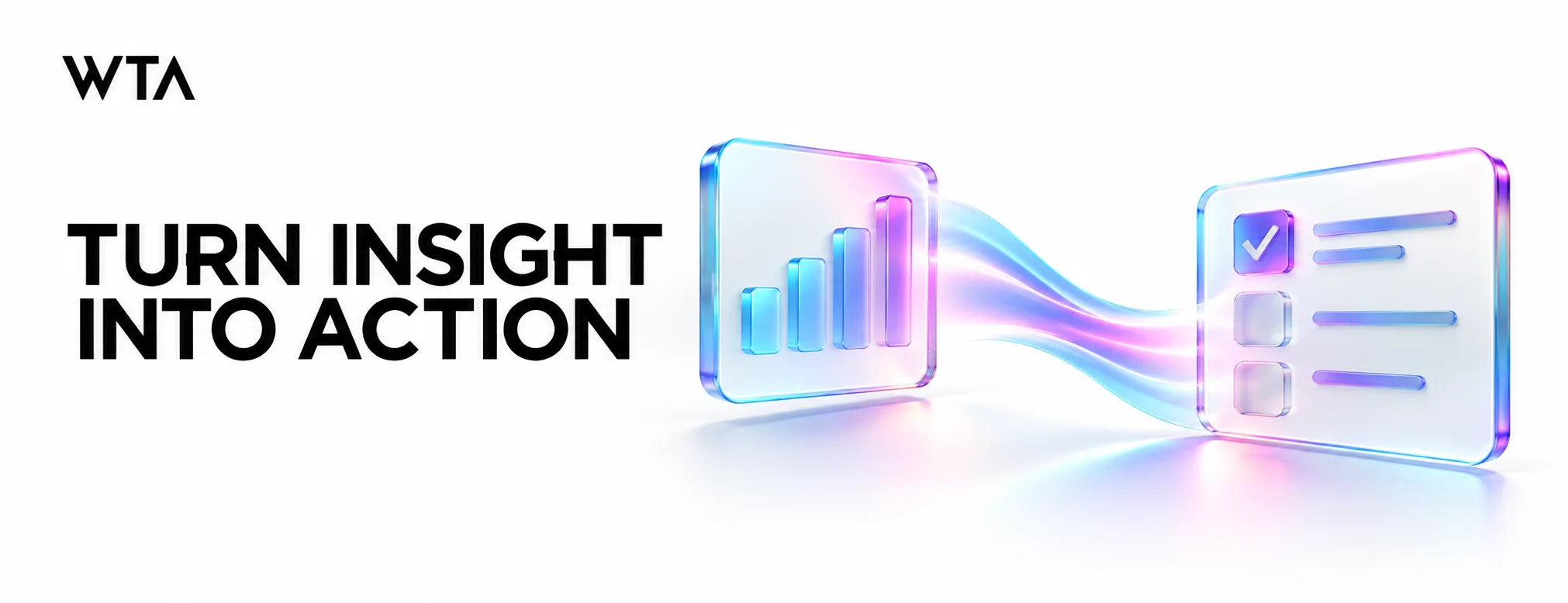
What should you prepare for Power BI agentic app creation?
Define the operational action that should follow an insight. Identify who may perform it, which system owns the result and how errors will be corrected. A reporting team needs those answers before turning a useful dashboard into an application that accepts input or changes business data.
Microsoft's September 28, 2026 FabCon announcement described agentic app creation in Power BI Desktop, using semantic models and Fabric Apps capabilities. The announcement said preview access would follow in the coming weeks. Confirm current availability and tenant eligibility before promising an implementation date.
When does a report need to become an application?
A report helps someone understand a situation. An operational application helps them take a controlled action. The need often appears when users export data, update a spreadsheet, collect approvals by email and then return to the original system to complete the process.
Map that sequence before deciding to build. Which steps are repeated? Which require judgment? Where do users re-enter information? A small application may help when the process has stable rules and a clear owner. A poorly defined process can remain confusing even when its interface is generated quickly.
Keep a report when the main need is exploration or communication. Do not add write-back simply because a new feature makes it possible. Every additional action creates responsibilities for validation, access, support and recovery that the organization must be willing to own.
What is different about Power BI write-back workflows?
Writing information changes the nature of the risk. An incorrect chart can mislead a reader; an incorrect update can alter the underlying process. The application must validate the action, confirm the user's authority and make the resulting state understandable to other people who depend on it.
For an illustrative example, a manager may review outstanding service requests and assign a priority. Before building that interaction, agree what each priority means, who can change it and which downstream team will use it. The example is a planning exercise, not a claim about a deployed WTA solution.
Define the system of record. If an application writes to a local copy while another system remains authoritative, the team needs a reconciliation rule. Avoid introducing a convenient interface that creates a second, conflicting version of the business process.
Which business rules should be written first?
- Allowed action: the exact update a user can make.
- Validation: the conditions that must be true before accepting it.
- Approval: whether another person must review the change.
- Conflict handling: what happens when two people act on the same record.
- Correction: how an incorrect action is reversed or repaired.
Use examples that cover both valid and invalid requests. A rule such as “only managers may approve” still needs a definition of which manager, for which records and under which conditions. Make the rule testable before relying on generated interface behavior.
Write user-facing messages for common failures. Explain what happened and what the person can do next. A technical error alone is not a usable recovery path, especially when the user does not know whether the requested update was accepted.
How do semantic models affect app readiness?
The model must communicate the business meaning needed by the workflow. Review important measures, relationships and filters with the process owner. An application built around an ambiguous definition can make the wrong action easier to perform, even when the interface looks clear.
Use a small set of representative records to test the intended behavior. Include missing information, unusual combinations and records that a user must not access. Test with representative roles rather than only an administrator account.
The agentic interfaces guide discusses where conversational interaction helps. For this use case, choose the interaction that makes the action and its consequences easiest to understand. A simple form or visible confirmation may be more useful than a fully conversational interface.
Who owns an app after the initial build?
Assign an application owner before the pilot. That owner coordinates changes, support and the decision to expand or retire the app. The analyst who creates the first version should not silently become responsible for every operational problem that follows.
Agree how the app moves from experimentation into an accepted operating process. Record the environment, dependencies, permissions and release procedure. Decide which changes a business team can make and which require engineering or IT review. This keeps fast creation from becoming uncontrolled maintenance.
Plan for a person leaving the team or changing role. Ownership, access and support knowledge should transfer through an established process. An application that works only while its original creator is available is not a dependable business capability.
What should an initial preview pilot demonstrate?
Use one narrow workflow and a limited group of users. Test whether they understand the information, can perform the approved action and can recover from common errors. Keep a record of accepted and rejected updates so the team can compare behavior with the written rules.
Measure completion time and correction effort alongside user feedback. Faster interaction is not useful if it creates more downstream repair. Ask the receiving team whether the resulting data and decisions are usable, not only whether the new interface is convenient.
End the pilot with a decision about scope, ownership and unresolved requirements. Confirm the current product release stage before any production commitment. Preview evaluation should produce evidence for a later decision rather than an assumption that every demonstrated capability is ready for business-critical use.
Frequently asked questions
Is Power BI agentic app creation available to every tenant?
Do not assume universal access. The September announcement described a forthcoming preview. Verify the current rollout, licensing and tenant requirements for the exact experience you intend to test.
Is a write-back app the same as a report?
No. An app can change operational information or move work forward. That requires clear validation, access and correction rules in addition to the quality of the displayed data.
Who should approve the first workflow?
The business process owner should approve its rules and outcomes, with the appropriate data and technical owners reviewing access, integration and support requirements.
Should every manual spreadsheet process become an app?
No. First assess whether the process is useful, stable and worth maintaining. Simplifying or removing unnecessary work can be a better decision than automating it.
Turn a reporting bottleneck into a clear workflow
Explore Platform Modernization and AI Native Product Engineering. To assess a Power BI application opportunity, Say Hello. Share the report and the action users take after reading it.

.svg)
.svg)
.svg)
.svg)
.svg)
.png)














.svg)

.png)