Agent Builder using Jev

Turn a business workflow into a coordinated team of AI agents. WTA combines Jev’s structured decisions with Microsoft Agent Framework to route tasks, connect approved tools, and check results. Start with a focused pilot, clear human approvals, and measurable quality and operating costs.

Get Started
Get Started
Agent Builder using Jev
AI
Decisions. Agents. Human control.

Microsoft tools. Clear business ownership.

Start with the work your team needs to complete. We assess the current journey and its costs, choose a useful pilot, and agree on quality, access, and operating checks before expanding automation.

Build useful workflows

Microsoft Azure, Foundry, and Copilot Studio support different delivery needs. We choose the approach around your data, integrations, and team responsibilities.

Keep people in control

Microsoft Entra and agreed approval steps set access boundaries. Engineers and business owners review important changes and retain responsibility for results.

Measure daily operations

Azure Monitor and the agreed Agent Swarm operating view help track workflow quality, failures, support effort, and cost per completed task.

Evidence first. Clear architecture decisions.

We review the agreed Azure workload against the business it supports. Findings connect technical evidence to operating risk, improvement priorities, and a practical remediation plan.

Review five Azure pillars

Assess reliability, security, cost optimization, operational excellence, and performance efficiency. Sustainability adds a separate lens on efficient resource use.

Make tradeoffs visible

Explain how cost, capacity, access, and recovery choices affect the business. Recommendations include assumptions, dependencies, and indicative effort.

Agree the next step

The scope specifies whether remediation and reassessment are included. A review identifies improvements; it does not itself fix the workload or certify security.

A useful use case. A measurable pilot.

We assess business priorities, data, technology, people, governance, and delivery readiness around specific use cases. Evidence determines where to start and which prerequisites must come first.

Understand the real workflow

Record volumes, effort, delays, exceptions, and current costs with the business owner. Identify where AI, conventional automation, or process changes may help.

Check data and controls

Review information quality, integration options, access boundaries, team skills, and human approvals. Readiness depends on the actions the proposed system will take.

Define the business case

Compare model, hosting, integration, human review, maintenance, and support costs. Agree acceptance measures, ownership, and stopping criteria before the pilot.

Jev Decisions. Microsoft Agent Workflows.

Combine a decision model with agents that perform defined tasks. Jev is integrated through TypeSafe AI’s external API; it is not a native Azure-hosted model. We agree on data boundaries before connecting production systems.

Jev decides

Jev returns structured choices, scores, and probability judgments. We evaluate routing and validation decisions against representative workflow examples.

Agents execute

Microsoft Agent Framework coordinates specialist agents and deterministic steps. Application code enforces allowed routes, tool permissions, and bounded retries.

People approve

Consequential actions pause for an authorized reviewer. Clear evidence, configured recovery, and monitoring keep ownership visible throughout the workflow.

Accelerate AI-Native Product Development
Use Generative AI for rapid prototyping, intelligent testing, and launching secure, scalable platforms faster.
Accelerate AI-Native Product Development
Architect Your Enterprise AI FutureDesign a future-proof AI foundation with a scalable plan, ethical governance rules, and a cross-departmental roadmap for unified adoption.
Unlock Hyper-automation with Agentic AIImplement autonomous, task specific AI agents that improve operations, reduce human workload, and drive real-time decision-making.
Build for Scale with Modular AI PlatformsDevelop modular, API ready AI platforms that adapt to evolving business needs and sustain long-term competitive advantage.

How to Get Started in 3 Steps

Your Agent Workflow in Three Delivery Stages

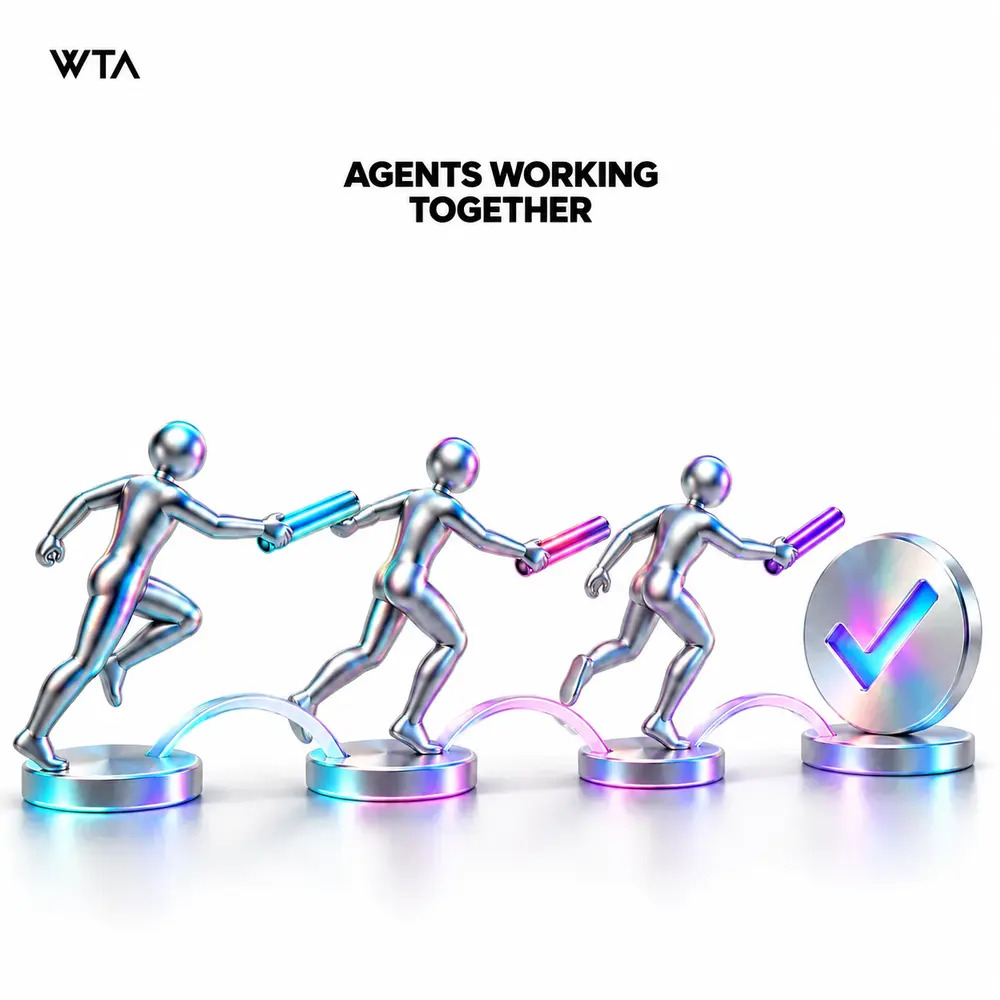
Illustrative Agent Builder using Jev team working through delivery decisions.
Assess & Design
Step
1

Assess & Design

Map one workflow, establish a baseline, and agree on acceptance criteria. Define agent roles, Jev decision questions, data boundaries, and human checkpoints.

Build & Evaluate
Step
2

Build & Evaluate

Connect Jev through its API to Microsoft Agent Framework. Integrate approved tools, then test routing, agent outputs, approvals, and failure paths on representative cases.

Deploy & Operate
Step
3

Deploy & Operate

Release within the agreed environment with monitoring, configured checkpoint storage, bounded retries, and idempotent writes. Train owners and review pilot evidence before expansion.

Accelerated use cases real-world aI impact

No items found.

Frequently asked questions

How do we choose the first workflow?

We review the current process, task volume, delays, exceptions, and costs with its business owner. The first pilot should have a clear purpose, accessible data, and measurable acceptance criteria. We prioritize a manageable workflow that can demonstrate useful results without disrupting core operations.

How do you compare current costs with agent costs?

We compare the current cost of completing the work with the full proposed operating cost. This includes model calls, integration, hosting, human review, support, and maintenance. Pilot results test the assumptions. Savings are evaluated from evidence rather than inferred from token prices alone.

Will agents replace every screen or approval?

No. We choose chat, forms, and dashboards according to the task. Flexible requests can suit conversation, while precise inputs and comparisons often need structured screens. Important actions retain agreed approval steps. Users should be able to correct mistakes, understand status, and reach human support.

How do you manage agents after launch?

We agree on monitoring, support ownership, recovery procedures, and review cycles before release. The operating view tracks task quality, failures, response time, and cost. Agent Swarm capabilities and integrations are scoped and verified for each engagement, with human escalation where the workflow needs it.

Frequently asked questions

What is a Well-Architected Framework Review?

It is an evidence-based inspection of an agreed cloud workload. WTA reviews architecture and operating practices against business requirements, then prioritizes improvements across reliability, security, cost, operations, and performance. The output is a practical decision and remediation plan.

Does the review include implementation?

Only when implementation is included in the agreed scope. The assessment identifies and prioritizes changes. Remediation, retesting, and ongoing support can be commissioned separately or included as defined deliverables, with ownership and acceptance criteria agreed before work begins.

Can you review a running Azure application?

Yes. We agree on appropriate access and evidence collection with your team. Architecture documents, configuration exports, monitoring, spending records, and stakeholder discussions can support the review. Production changes and disruptive tests require a separately agreed plan.

How is this different from AI readiness?

A cloud architecture review examines how an existing workload is designed and operated. AI readiness examines whether a particular AI initiative has the business case, data, systems, people, and controls needed to proceed. The assessments can inform one another.

Frequently asked questions

What is an AI Readiness Assessment?

It evaluates whether a particular AI initiative has a useful business case and the data, systems, people, and controls needed to work. WTA identifies prerequisites, prioritizes opportunities, and defines a pilot with accountable ownership and measurable acceptance criteria.

Do we need a chosen AI use case before starting?

No. We can begin with business priorities and current workflows, then compare possible use cases. The assessment helps identify where AI may add value, where conventional automation is sufficient, and where process or data improvements should come first.

Does the assessment guarantee compliance or savings?

No. It identifies relevant governance gaps and tests the business assumptions behind a proposed pilot. Compliance responsibilities remain with the organization and its advisers. Costs and benefits must be validated against actual workflow performance before wider deployment.

What happens after the assessment?

Your team receives a prioritized plan and decides whether to proceed. The next step may be resolving data or process gaps, running a scoped pilot, or deferring the initiative. Implementation and ongoing support are agreed separately with clear responsibilities and acceptance criteria.

Frequently asked questions

What is Agent Builder using Jev?

It is WTA’s service for building coordinated agent workflows around an agreed business process. Jev supplies structured decisions; Microsoft Agent Framework coordinates agents and code that perform the work. The engagement defines integrations, controls, evaluation, and operational ownership.

Is Jev a text-generating LLM?

Jev is TypeSafe AI’s decision model. It returns structured choices, scores, and probability judgments. Other models or specialist agents can generate text and execute permitted tools. A confidence signal does not guarantee correctness, so decisions are evaluated and checked before consequential actions.

How does Jev connect to Microsoft Agent Framework?

We build a custom API integration that calls Jev and validates its response. Workflow code routes work to the permitted executor or human review. Jev is accessed through an external TypeSafe AI API; deployment, data handling, and access requirements are reviewed for your engagement.

Can humans approve actions and handle exceptions?

Yes. We define approval gates, reviewers, evidence, and escalation routes. Important writes are checked before execution. Where recovery is required, we configure checkpoint storage, bounded retries, and idempotent writes, then test interruption and failure scenarios.

What will we receive, and how is success measured?

The agreed scope covers a workflow design, agent and decision contracts, working integrations, evaluation results, and an operating runbook. Pilot measures can include completion quality, exception rates, review effort, latency, and cost per completed task. Wider rollout follows the evidence rather than a promised savings percentage.