









Industries

Healthcare & Life Sciences

Microsoft Azure engineering for healthcare and life sciences: connect administrative intake, document processing, care coordination, and staff knowledge, with clear access controls, human oversight, and measurable pilots.

Healthcare & Life Sciences

Microsoft AI Engineering for Healthcare & Life Sciences

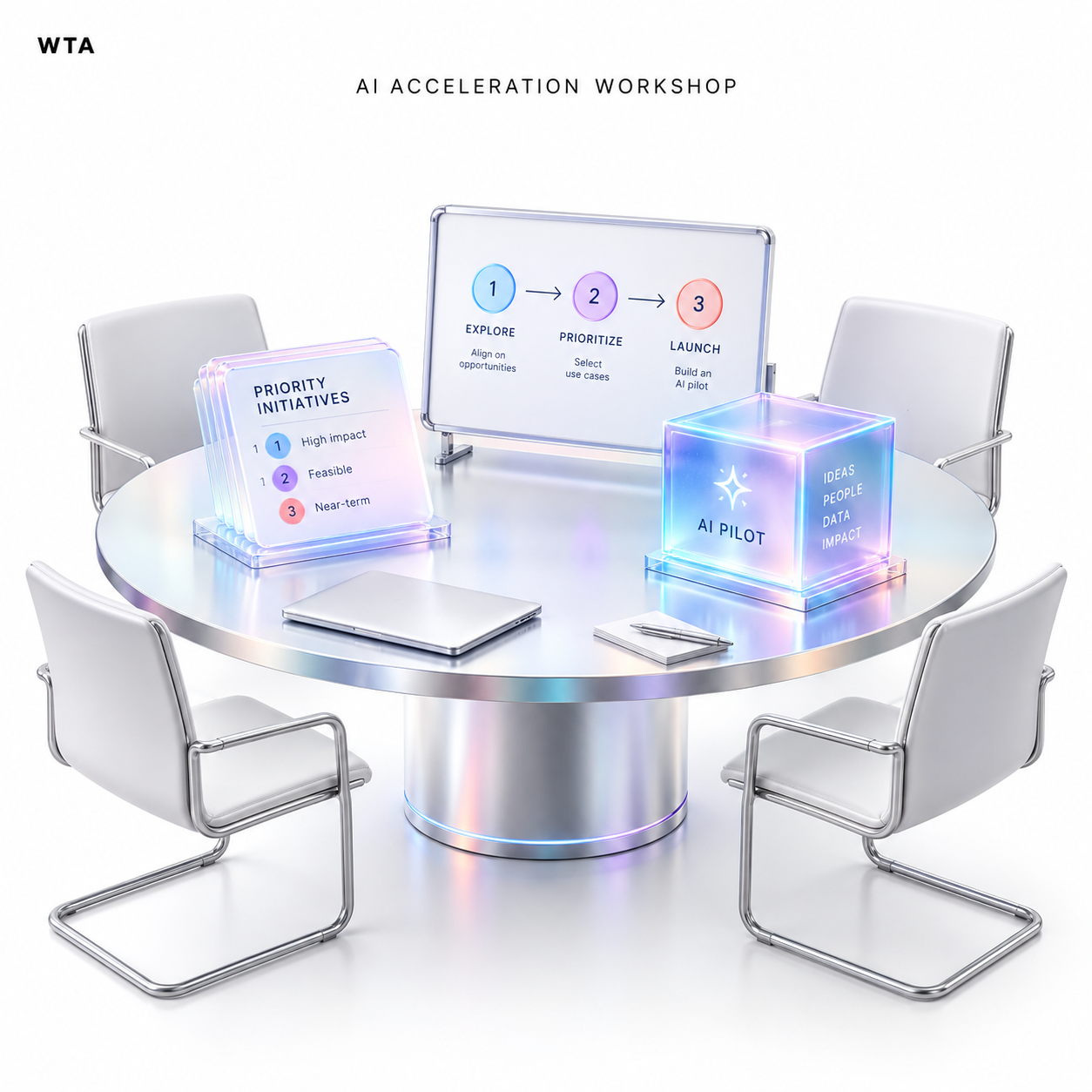
WTA helps healthcare and life sciences improve administrative intake, document processing, care coordination, and staff knowledge. We connect existing systems on Microsoft Azure, assess patient information and clinical review boundaries, and define a focused pilot. Your team agrees on quality, cost, responsibilities, and approval steps before a wider rollout.

Healthcare & Life Sciences
Think Strategically
Innovate Faster
Scale Intelligently

Practical AI Capabilities for Healthcare

Clinical Documentation & Ambient Scribe

Prepare draft clinical notes from approved inputs, with clinician verification before they enter the patient record.

Prior Authorization & Utilization Management

Organize intake and supporting evidence for authorization reviews, with decisions retained by accountable professionals.

Medical Coding & CDI

Suggest coding references from approved records for qualified review, with visible sources and correction paths.

Claims, SIU & Payment Integrity

Highlight unusual claims and organize supporting evidence for qualified investigation and payment review.

Patient Engagement & Care Coordination

Support outreach and care-team coordination through approved information, role-based access, and clear task ownership.

Pharmacovigilance & Trial Operations

Organize safety-case information and study tasks for qualified review, with traceable sources and documented approvals.

A Measured Path to Healthcare AI

1

Discovery & Compliance Alignment

Define objectives, KPIs, and guardrails; assess data sources, consents, and regulatory scope.

2

Design & Pilot

Prototype with clinicians/SMEs, plan human-in-the-loop reviews, and validate safety and quality metrics.

3

Implementation & Support

Phased rollout with EHR/FHIR integration, change enablement, and training for clinical and ops teams.

4

Evaluation & Evolution

Monitor accuracy, bias, and drift; optimize cost/performance; extend use cases under governance.

Frequently Asked Questions
Where should healthcare and life sciences start with AI?
chevron down icon

Start with a specific workflow and an accountable business owner. Review task volume, delays, rework, current costs, and available data. WTA's AI Readiness Assessment identifies practical opportunities and prerequisites. Choose a pilot with measurable acceptance criteria before committing to a wider implementation.

Can you work with our existing systems?
chevron down icon

Yes. We assess the existing applications, interfaces, and patient information and clinical review boundaries. We then define the integrations and access boundaries needed for the chosen workflow. A staged approach lets your team test changes and retain a manual fallback while confirming that business operations continue as expected.

How are data and important decisions protected?
chevron down icon

Access is scoped to the task and approved by the responsible team. We define identity controls, data handling, monitoring, and human approvals during design, then test those controls before release. Your organization and its advisers determine applicable obligations; an AI implementation does not itself establish compliance.

How do you measure value and operating cost?
chevron down icon

We establish a baseline for task time, quality, errors, and current operating costs. The pilot measures the same outcomes alongside model usage, infrastructure, integration, human review, maintenance, and support. Results inform the decision to expand, adjust, or stop the workflow.

What happens after the pilot?
chevron down icon

Your team reviews the evidence against agreed acceptance criteria. The next step may be resolving gaps, extending a useful workflow, or deferring further investment. Delivery scope, timelines, operating ownership, support arrangements, and recovery procedures are agreed before expansion.