







Industries

Financial Services & FinTech

Microsoft Azure engineering for banking, payments, and insurance: connect document review, onboarding, reconciliation, and service operations, with clear access controls, human oversight, and measurable pilots.

Financial Services & FinTech

Microsoft AI Engineering for Financial Services & FinTech

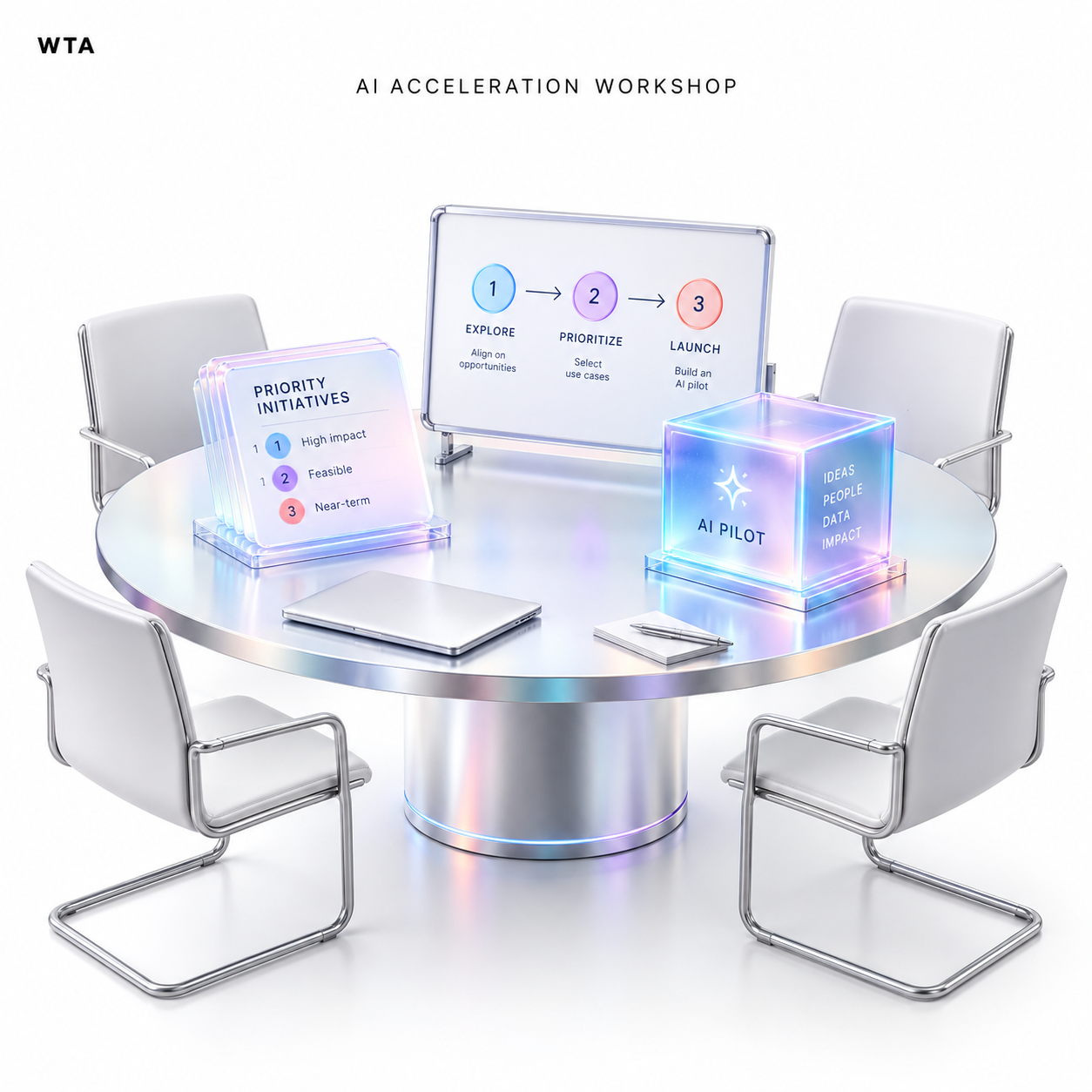
WTA helps banking, payments, and insurance improve document review, onboarding, reconciliation, and service operations. We connect existing systems on Microsoft Azure, assess financial records and customer permissions, and define a focused pilot. Your team agrees on quality, cost, responsibilities, and approval steps before a wider rollout.

Financial Services & FinTech
Think Strategically
Innovate Faster
Scale Intelligently

Practical AI Capabilities for Finance

Risk & Compliance
Risk & Compliance

Support policy and evidence review with approved sources, access controls, and documented human decisions.

Fraud Detection & Transaction Monitoring

Highlight unusual transaction patterns and organize evidence for accountable fraud investigation teams.

Credit Risk & Underwriting

Organize application evidence and risk indicators for qualified underwriting review, with documented criteria and human oversight.

Personalized Banking & Wealth CX

Support advisers with relevant customer context and approved information, while retaining important decisions with people.

Payments, Reconciliation & Operations

Match records, highlight payment exceptions, and route reconciliation work to accountable operations teams.

AI-Powered Agentic Systems

Connect approved back-office tasks with clear tool permissions, human checkpoints, and traceable workflow results.

A Measured Path to Finance AI

1

Discovery & Strategy

Regulatory and business alignment; KPI definition; opportunity sizing; data and platform assessment.

2

Design & Development

Secure, high‑performance solutions with privacy‑by‑design, model governance, and enterprise integrations.

3

Implementation & Support

Phased rollout, change enablement, and training for product, risk, and operations teams.

4

Evaluation & Evolution

Continuous testing, drift monitoring, and cost/quality optimization with transparent governance and auditability.

Frequently Asked Questions
Where should banking, payments, and insurance start with AI?
chevron down icon

Start with a specific workflow and an accountable business owner. Review task volume, delays, rework, current costs, and available data. WTA's AI Readiness Assessment identifies practical opportunities and prerequisites. Choose a pilot with measurable acceptance criteria before committing to a wider implementation.

Can you work with our existing systems?
chevron down icon

Yes. We assess the existing applications, interfaces, and financial records and customer permissions. We then define the integrations and access boundaries needed for the chosen workflow. A staged approach lets your team test changes and retain a manual fallback while confirming that business operations continue as expected.

How are data and important decisions protected?
chevron down icon

Access is scoped to the task and approved by the responsible team. We define identity controls, data handling, monitoring, and human approvals during design, then test those controls before release. Your organization and its advisers determine applicable obligations; an AI implementation does not itself establish compliance.

How do you measure value and operating cost?
chevron down icon

We establish a baseline for task time, quality, errors, and current operating costs. The pilot measures the same outcomes alongside model usage, infrastructure, integration, human review, maintenance, and support. Results inform the decision to expand, adjust, or stop the workflow.

What happens after the pilot?
chevron down icon

Your team reviews the evidence against agreed acceptance criteria. The next step may be resolving gaps, extending a useful workflow, or deferring further investment. Delivery scope, timelines, operating ownership, support arrangements, and recovery procedures are agreed before expansion.