


The Sequoia Thesis, and Why It Matters for Enterprise AI
Julien Bek at Sequoia Capital identified something most AI founders are still reluctant to admit: if you sell the tool, you are in a race against the model. Every new release of GPT, Claude, or Gemini is a potential threat to your product’s differentiation. The tool that took eighteen months to build can become a native feature of the next foundation model in a single announcement.
But if you sell the work — if you are accountable for the outcome, not just the capability — every improvement in the underlying model makes your service faster, cheaper, and harder to compete with. The AI tailwind becomes a structural advantage rather than an existential threat. Bek calls this the difference between a copilot and an autopilot. A copilot sells the tool and puts the human in the driving seat. An autopilot sells the outcome and takes responsibility for getting there.
WTA is an autopilot. We have been since before the term existed.
Intelligence vs Judgement: The Distinction That Determines Everything
Bek draws a distinction between intelligence and judgement that determines where AI can win now and where human expertise remains irreplaceable. Intelligence is rules-following at scale: translating a specification into code, running test suites, parsing regulatory documents against a compliance framework, generating a first-draft contract from a template. These tasks are complex, but they follow rules — and AI has crossed the threshold where it executes them autonomously, at speed, and with accuracy that matches or exceeds senior practitioners.
Judgement is different. It is knowing which feature to build next. Deciding whether to accept technical debt in exchange for shipping velocity. Determining when an agentic architecture is appropriate and when a simpler pipeline serves the client better. Recognising that a client’s stated requirement is not their actual need. These are things built on years of pattern recognition, on failures that cost real money, on knowing what enterprise procurement teams will and will not accept.
At WTA, our engineering pods run at a 90/10 ratio: 90% AI-accelerated intelligence work, 10% human judgement. Devin handles autonomous implementation. GitHub Copilot powered by Codex runs AI-assisted code review. Pilot governs every pull request before human eyes touch it. Cursor and Windsurf provide codebase-aware assistance across the full repository. v0 scaffolds UI variants from design specifications in minutes. The 10% — architecture decisions, governance review, quality assurance, the client relationship, the enterprise compliance posture — is where WTA’s senior engineers operate. That is the judgement layer. And it is precisely that combination — AI-velocity intelligence work governed by human expert judgement — that makes the autopilot model so defensible.
Why Enterprise AI Engineering Is the Perfect Autopilot Category
Bek’s opportunity map plots every services vertical on two axes: intelligence-to-judgement ratio and outsourced-to-insourced ratio. The autopilot playbook is to start where the intelligence ratio is highest and the outsourcing is most mature — because that is where the existing budget line can be substituted cleanly and where the buyer is already purchasing an outcome rather than a capability.
Enterprise AI platform engineering sits at an interesting position on that map. It is not pure intelligence work — architecture, governance, and strategic technical decisions require genuine judgement. But the implementation layer — which historically consumed 70–80% of delivery time and cost — is now almost entirely intelligence work that AI can execute autonomously at a fraction of the previous cost and time. This creates a specific autopilot opportunity: a firm that compresses the intelligence layer to near-zero marginal cost while maintaining the judgement layer at full professional quality. A firm that delivers what used to take six months in 90 days. A firm that prices on outcomes — a production-grade agentic platform — rather than on time-and-materials billing that rewards inefficiency. That firm is WTA.
The Six-Layer Stack That Makes the Autopilot Defensible
The reason WTA’s autopilot model compounds rather than commoditises is the depth of the technical stack we have built expertise across. Enterprise AI platform engineering in 2026 requires mastery across six distinct architectural layers, and most firms are strong in one or two. WTA is production-grade across all six.
Cloud and Runtime Foundation: Azure AI Foundry as the primary enterprise AI platform, Azure Durable Functions for stateful agentic workflows, AKS for containerised orchestration at scale, Azure API Management for secure service exposure, and AWS Bedrock and Google Vertex AI for cloud-agnostic model routing where enterprise requirements demand it.
Data, Retrieval and Knowledge: Azure AI Search for hybrid vector retrieval, Azure Data Factory and Databricks for governed ingestion pipelines, Snowflake for the data warehouse layer, Pinecone and dbt for the semantic and transformation layers. GraphRAG — knowledge graphs over governed enterprise data — is the architecture that makes every agent’s decisions explainable and auditable to regulators and boards.
Security, Identity and Compliance: WTA ships a control catalog, compliance matrix, and risk register as standard deliverables on every engagement — aligned to ISO 42001, EU AI Act, NIST AI RMF, SOC 2 Type II, and PCI DSS where applicable. Microsoft Entra ID governs agent identity. Azure Key Vault manages secrets. Microsoft Defender and Microsoft Purview provide the enterprise security envelope that regulated industries require.
Foundation Models: WTA routes across GPT-5.5, Claude Opus 4.8, Gemini 3.5 Flash, and open-source alternatives including Meta LLaMA 3, Mistral Large, and DeepSeek V4 Pro for air-gapped deployments. No vendor lock-in — every model selection is driven by the enterprise use case, compliance requirements, and cost profile of the specific workload.
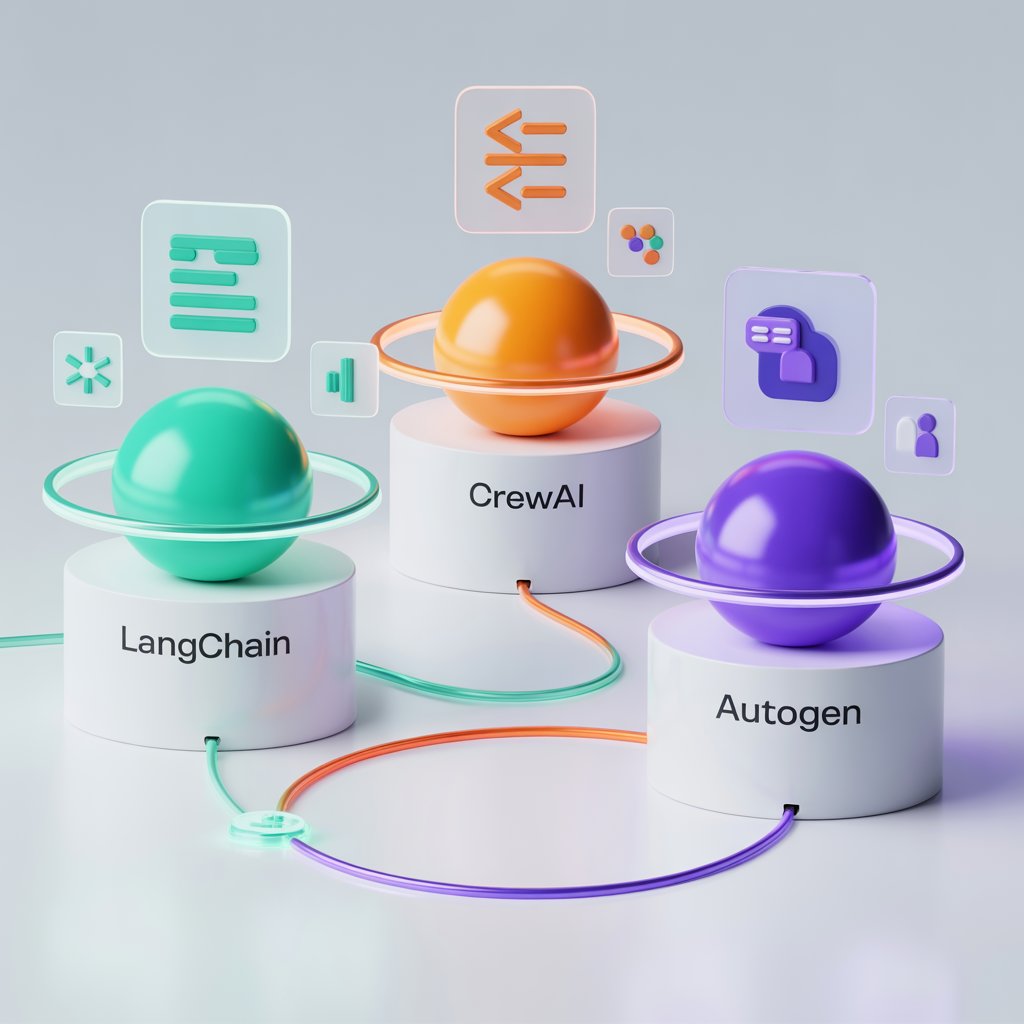
Agent Orchestration and Multi-Agent Runtime: Microsoft Agent Framework 1.0 — the direct successor to both Semantic Kernel and AutoGen — is WTA’s production runtime for all agentic platform engagements. It provides graph-based workflow orchestration, enterprise-grade session state management, type safety, middleware, and telemetry. Alongside Agent Framework 1.0, WTA works with LangGraph, LangChain, CrewAI, and LlamaIndex. MCP and A2A protocols are the 2026 interoperability standard on every agentic engagement.
AgentOps, Evaluation and Observability: Langfuse powers prompt versioning and eval suites. Every production agent has a golden dataset, regression gates that fire before every deployment, and traceable prompt histories. Azure Monitor and OpenTelemetry provide fleet-wide observability. Azure DevOps and MLflow manage the model and agent lifecycle. This is what makes agentic AI systems auditable, reversible, and trustworthy for enterprise production environments.
The Outsourcing Wedge and WTA’s Go-To-Market
Bek’s playbook for autopilots is precise: start with the outsourced, intelligence-heavy task. Nail distribution. Expand toward the insourced, judgement-heavy work as the AI compounds. WTA’s version is to start with the discrete, well-scoped AI-native platform engagement — the agentic platform pilot, the GenAI product MVP, the platform modernisation sprint — where the scope is clear, the ROI is immediate, and the substitution of a traditional system integrator is frictionless. These are engagements enterprises already outsource. They have a budget line, a procurement process, and a definition of done.
The 90-day SPEED framework — Strategy, Platform Architecture, Engineering, Evaluation, Deployment and Continuous Intelligence — is designed specifically for this wedge. It produces a production-grade, governed, observable agentic platform in twelve weeks. Not a proof of concept. Not a pilot that sits in a sandbox. A system that runs in production, generates measurable outcomes, and compounds WTA’s proprietary understanding of what works in each enterprise client’s environment.
As Bek notes, the data advantage compounds. Every engagement WTA completes deepens our understanding of what good architecture looks like for regulated financial services platforms, for healthcare AI systems, for industrial IoT agentic workflows. That pattern recognition — accumulated across 350+ enterprise engagements since 2015 — is the judgement layer that AI cannot replicate. It is the moat that makes the autopilot model defensible as the intelligence layer continues to commoditise.
The Innovator’s Dilemma WTA Does Not Have
Bek identifies a specific vulnerability for copilot companies trying to become autopilots: selling the work means cutting their own customers out of doing it. A firm that sells AI tools to enterprise engineering teams cannot simultaneously offer to replace those teams’ implementation work without fundamental channel conflict. WTA does not have this problem. We have never sold tools, training seats, or platform licences. From day one, the WTA model has been: you tell us what you need built, we build it, you own it. The client relationship is outcome-based. There is no channel conflict because there is no tool revenue to protect. This is the structural advantage that pure-play autopilots have over copilot companies in transition. WTA has been structurally positioned for the autopilot era since before the term existed.
What This Means for Enterprise Leaders Evaluating AI Partners in 2026
If you are a CTO, CIO, or VP of Engineering evaluating AI engineering partners in 2026, the Bek framework gives you a clean lens for the decision. Ask your prospective partner: are you selling me a tool or selling me the work? Are you building a copilot or an autopilot? Are you accountable for the outcome — a production-grade agentic platform that runs, scales, and can be audited — or are you accountable for delivery of a service that leaves you holding the implementation risk?
WTA’s answer is unambiguous. We are accountable for the outcome. We build production-grade AI-native enterprise platforms in 90 days. We hand you a system that runs in production alongside a control catalog, compliance matrix, and risk register that your procurement and compliance teams can audit. We are the autopilot. Book an AI Maturity Workshop with WTA to see what 90 days of autopilot delivery looks like in practice.
Frequently Asked Questions
What is the difference between a copilot and an autopilot in the context of enterprise AI? A copilot sells the tool and puts the human professional in control of using it. An autopilot sells the outcome — the work gets done, the result is delivered, and the vendor is accountable for the quality. WTA is an autopilot: contracted to deliver a production-grade agentic platform in 90 days, not to provide tools that help your team build one.
Why does the autopilot model compound over time? Every engagement an autopilot completes deepens its proprietary understanding of what works in a specific category. The pattern recognition accumulated across hundreds of enterprise engagements — what architecture decisions succeed, what governance approaches satisfy regulators, what implementation paths avoid technical debt — is a data moat that AI tools cannot replicate. WTA has been building this moat since 2015 across 350+ enterprise engagements.
How does WTA’s 90-day SPEED framework relate to the autopilot model? The SPEED framework is WTA’s operationalisation of the autopilot model: the structured 90-day path from AI maturity assessment to production-grade agentic platform, governed by the Agent Development Life Cycle, ISO 42001, and all six Azure Well-Architected pillars. It is the mechanism by which WTA delivers outcomes rather than effort.

.svg)
.svg)
.svg)
.svg)
.svg)
.png)












.svg)

.png)