


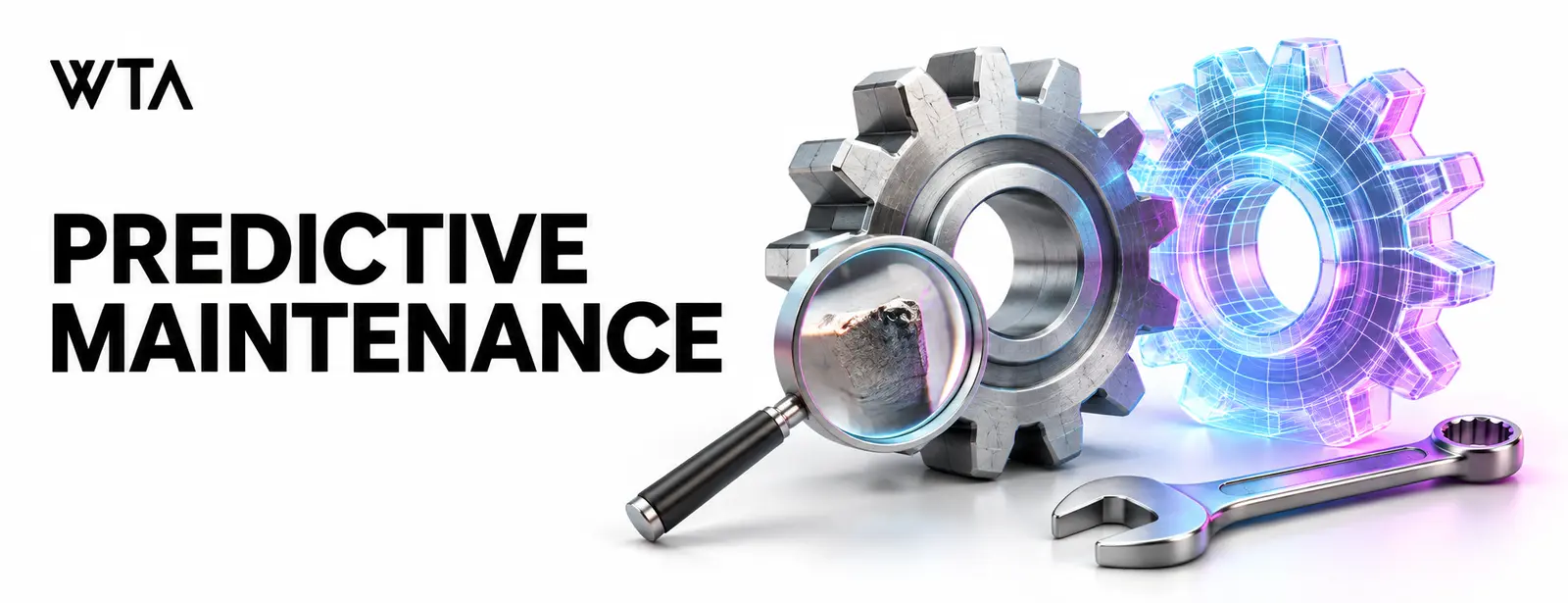
What does a digital twin represent?
A digital twin models a physical asset or environment and its relationships. It can connect equipment information with sensor readings and operating history. Microsoft's Azure Digital Twins documentation describes models for environments such as buildings, factories, and energy networks. The useful representation depends on the decisions the maintenance team needs to make.
Seeing current equipment conditions is different from predicting a failure. Prediction requires suitable data, a defined target, and evidence that the model performs under relevant operating conditions. Begin by checking sensor reliability, missing readings, equipment identifiers, and maintenance records. A detailed visualization cannot compensate for an unreliable data foundation.
Connect findings to maintenance work
An alert should provide the equipment context, supporting evidence, urgency, and a clear next step. Define who reviews it and how an approved action enters the maintenance system. Keep safety-critical decisions within the appropriate controls. Record whether the finding was useful and what the technician discovered so the process can improve.
Pilot on a bounded equipment group
Choose assets with accessible records and a meaningful maintenance problem. Compare the proposed workflow with current practice over a suitable period. Track missed problems, false alarms, inspection effort, and operational disruption. Include the cost of sensors, integration, model upkeep, and technician review when assessing whether wider deployment is justified.
Equipment ages, operating loads change, and sensors are replaced. Monitor data quality and review performance when these conditions shift. Establish how teams respond when the system becomes unavailable or unreliable. Keep maintenance expertise involved throughout development so recommendations remain relevant to the plant's actual operating constraints. Ask technicians to review alerts during the pilot and record whether the proposed next step matched the equipment's actual condition.
Identify the maintenance decision before building the model
Choose an asset group and a specific operational question. The question might concern which equipment needs inspection or which recurring faults deserve investigation. Ask maintenance staff how they make that decision today and which information they trust. A detailed virtual representation has limited value if it does not improve a decision that somebody is responsible for making.
Separate condition information from recommendations and authority. A changed sensor reading may justify investigation without justifying a shutdown. The workflow should make that distinction visible. In an illustrative production line, an assistant could assemble recent readings, maintenance notes, and known operating changes for a technician, while the existing safety and maintenance processes determine the permitted response.
Assess the quality of the operating history
Review whether equipment identifiers, timestamps, maintenance events, and sensor records can be related reliably. Look for periods when equipment was offline, sensors were replaced, or operating conditions changed. These details affect interpretation. A model can find patterns in inconsistent data that look convincing but do not describe the physical situation accurately enough to guide work.
Ask technicians to review representative historical examples before designing the pilot. Their explanations can reveal missing context that is absent from the data. WTA's platform modernization services address fragmented information and integration dependencies, while AI product engineering can turn an assessed use case into a reviewable maintenance support application.
Design an alert that helps a technician act
Present the equipment, observed change, relevant evidence, and suggested next investigation step. Explain uncertainty and distinguish measured values from generated interpretation. Avoid forcing staff to read a long narrative before identifying the asset or concern. Link the alert to the existing work process so it does not become another disconnected queue that nobody owns.
Include a practical feedback mechanism. A technician should be able to record whether the concern was useful, irrelevant, or impossible to assess from the available evidence. That feedback needs consistent definitions if it is to support future evaluation. Do not treat every dismissed alert as a model error without understanding whether the operating context changed after the alert was produced.
Evaluate operational benefit before broader rollout
Measure the burden of reviewing alerts alongside the useful interventions they support. Include investigation effort, unnecessary inspections, and missing or delayed warnings. Compare similar assets and operating conditions where possible. A retrospective demonstration based on carefully selected failures is not enough to establish that the service will improve daily maintenance decisions.
Keep automated physical actions outside the initial scope unless separately engineered and approved through the relevant processes. Plan how the service behaves when data stops arriving or appears inconsistent. A maintenance assistant should make uncertainty visible rather than quietly continue producing recommendations from stale readings. Agree who can suspend its use and how technicians continue their normal work during an interruption.
Frequently asked questions
Is a digital twin itself a predictive maintenance model?
Not necessarily. A representation of assets and relationships can support an application, but prediction and maintenance decisions require additional design and evidence. Start with the operational question and available data. Evaluate whether the complete workflow helps technicians act appropriately rather than assuming the representation alone produces dependable predictions.
Can a pilot work with imperfect sensor data?
It may be possible within clearly understood limits. Assess missing readings, inconsistent identifiers, and changes in operating conditions before choosing the use case. The application should identify uncertainty and avoid implying precision the evidence cannot support. Some data problems need correction before a meaningful evaluation can begin.
Should agents control equipment directly?
Do not assume that a maintenance support use case authorizes physical control. Consequential actions require separate engineering, safety assessment, and approval through the relevant processes. A bounded first release can prepare evidence for technicians while preserving existing decision authority and the established route for inspection or intervention.
What should the first assessment produce?
It should identify the maintenance decision, candidate assets, relevant information, data gaps, and a testable pilot scope. Include operational ownership and a comparison with current practice. The result may recommend improving data or integration first rather than proceeding directly to a predictive model or autonomous workflow.
Updated September 18, 2026. Microsoft Azure Digital Twins overview. Related: How to Measure AI ROI: Metrics That Matter.

.svg)
.svg)
.svg)
.svg)
.svg)
.png)



















.svg)

.png)