


Start with the workflow, not a ranking
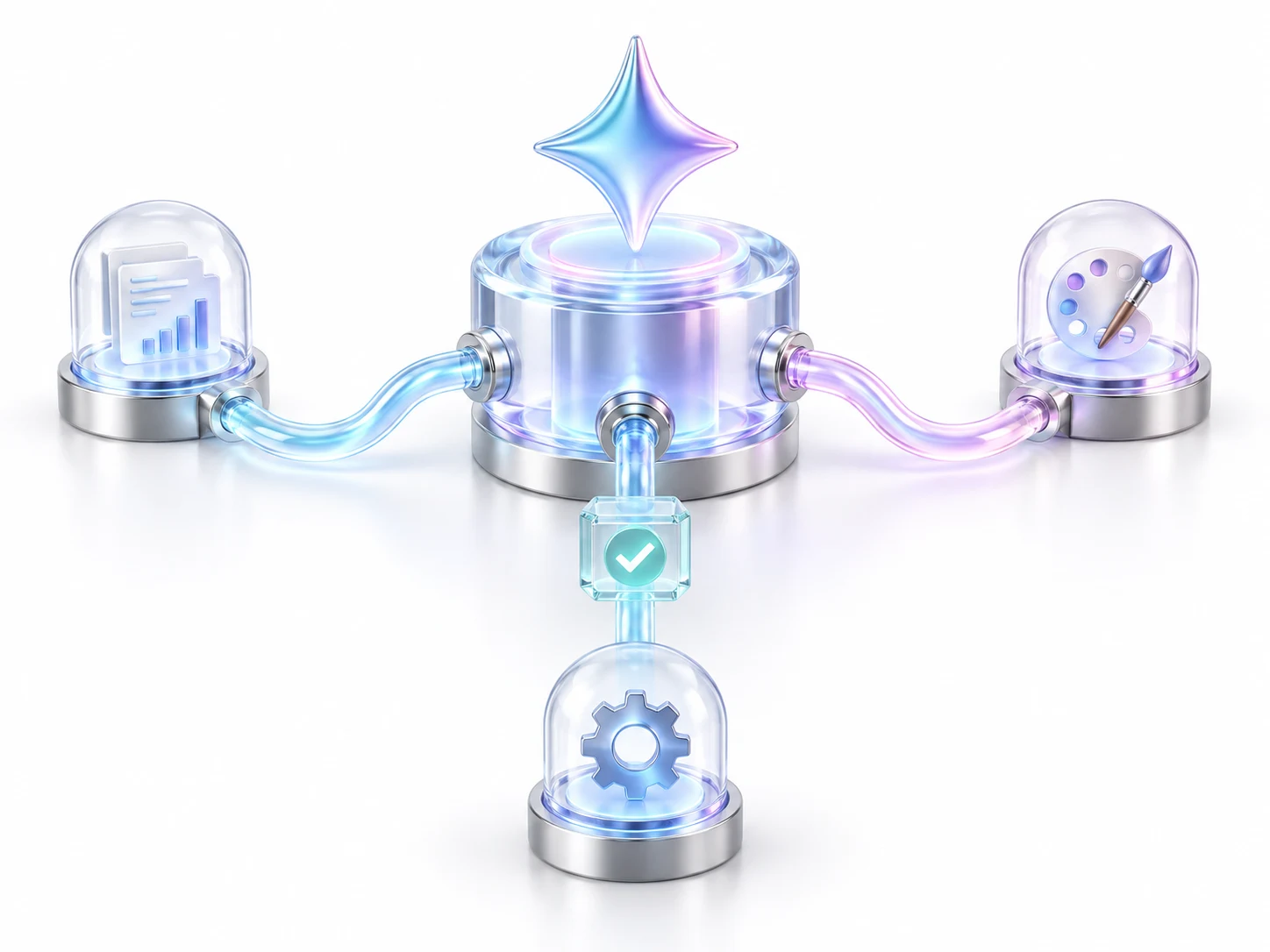
Define the task, available data, required approvals, and expected failure behavior before comparing frameworks. A simple process may only need ordinary application code and a model call. More complex work may need persistent state, tool access, branching, or several specialized agents. Choose the smallest solution your team can operate reliably.
Microsoft Agent Framework
Microsoft describes Agent Framework as the successor to Semantic Kernel and AutoGen. It combines agent abstractions with workflows, session state, middleware, and integrations. Evaluate the capabilities and release status of the specific language and components you intend to use. An open-source framework does not by itself establish your application's support agreement or compliance posture.
LangChain and LangGraph
LangChain provides an agent harness with model, tool, prompt, and middleware components. LangGraph provides lower-level orchestration for combinations of deterministic and agentic workflows. They serve related but distinct needs. Consider the balance between ready-made abstractions and explicit control, and test how your team will debug, evaluate, and maintain the resulting application.
CrewAI distinguishes structured Flows from collaborating agent Crews. Assess whether that model fits your work and your preferred level of control. For an existing AutoGen deployment, inspect maintenance requirements and migration options rather than replacing a working system solely because a newer framework exists. Plan migration around tested behavior and support needs.
Compare the same representative task
Build a small evaluation using the same task, tools, data, and acceptance criteria across candidates. Measure successful completion, latency, cost, recoverability, and the engineering effort needed to understand failures. Test interrupted execution, unavailable tools, repeated actions, and human approval. Include the people who will support the system after the pilot.
Ask operational questions before selection
How are secrets and permissions managed? Can a workflow resume safely after failure? Can reviewers inspect source evidence and actions? What changes when the model or a dependency is upgraded? Review licensing, hosting options, and relevant support terms. For Azure workloads, distinguish the five Well-Architected pillars from additional sustainability guidance. Ask a support engineer to investigate a deliberately failed run during the evaluation. The time needed to locate the problem, understand completed actions, and recover safely is a useful selection criterion. A framework that looks concise in a demonstration may require substantial operational work in your environment.
Compare frameworks using one representative workflow
Give each candidate the same task, sources, permitted tools, and acceptance criteria. A useful comparison might involve classifying a service request, retrieving an approved record, preparing a response, and waiting for review. Include an interrupted operation. The result should reveal how easily the team can understand and maintain the process, not just how quickly it can produce a demonstration.
Keep model choice separate from framework choice during the comparison. If each prototype uses different inputs and a different model, the source of a quality difference becomes difficult to explain. Record important configuration differences explicitly. The purpose is a defensible engineering decision, not a leaderboard that gives a precise-looking score to fundamentally different experiments.
Inspect the operational details behind the abstraction
Ask where task state is stored, how completed actions are identified, and what happens after a process stops unexpectedly. Review how the application records a human decision and resumes work later. These questions matter when a workflow lasts longer than a single conversation or depends on a business user who may not respond immediately.
Inspect the diagnostic experience with the engineers who will support the application. They should be able to connect a user report to a specific step and configuration. WTA's AI-native product engineering services evaluate these choices against delivery requirements. Agentic platform engineering becomes relevant when several workflows need shared operating controls and reusable integration patterns.
Include maintenance in the selection decision
Assess the team's familiarity with the language and deployment approach, the effort needed to test upgrades, and the availability of clear documentation for required features. A framework that suits a research prototype may require additional work to fit existing release and support practices. Make that work visible in the comparison rather than treating it as an unspecified production phase.
Document why the chosen option is appropriate and what would trigger reconsideration. A new requirement or maintenance problem can justify a change; a new product announcement alone is weaker evidence. Avoid migrating a functioning workflow without a specific expected benefit and a plan to verify that existing behavior remains acceptable after the change.
Frequently asked questions
Is there one best framework for every enterprise?
No. The appropriate choice depends on the workflow, integration needs, operating environment, and team's maintenance capability. Evaluate a representative task with consistent acceptance criteria. A popular framework can still be a poor fit if it adds complexity or leaves important recovery and support requirements unresolved for your application.
Should framework selection happen before process discovery?
Usually the process should establish the requirements first. Identify the steps, exceptions, information, and authority involved before comparing implementation options. Otherwise the team may reshape the business problem to match a preferred tool. A short technical exploration is useful when it tests a clearly identified feasibility question.
Do multiple agents require a complicated framework?
Not necessarily. Start with the simplest design that makes responsibilities and execution understandable. Add orchestration features when the workflow needs them and test their effect on recovery, quality, and cost. The number of agents is not a measure of business value or evidence that the application is well designed.
What should the decision record contain?
Record the evaluated versions, required capabilities, prototype results, operating responsibilities, and material limitations. Explain why the selected option fits better than the alternatives for this task. Include an upgrade and review approach so future engineers understand the original reasoning rather than inheriting a dependency with no documented purpose.
Updated September 18, 2026. LangChain; LangGraph; CrewAI. Related: Design Patterns for Multi-Agent Workflows.

.svg)
.svg)
.svg)
.svg)
.svg)
.png)










.svg)

.png)