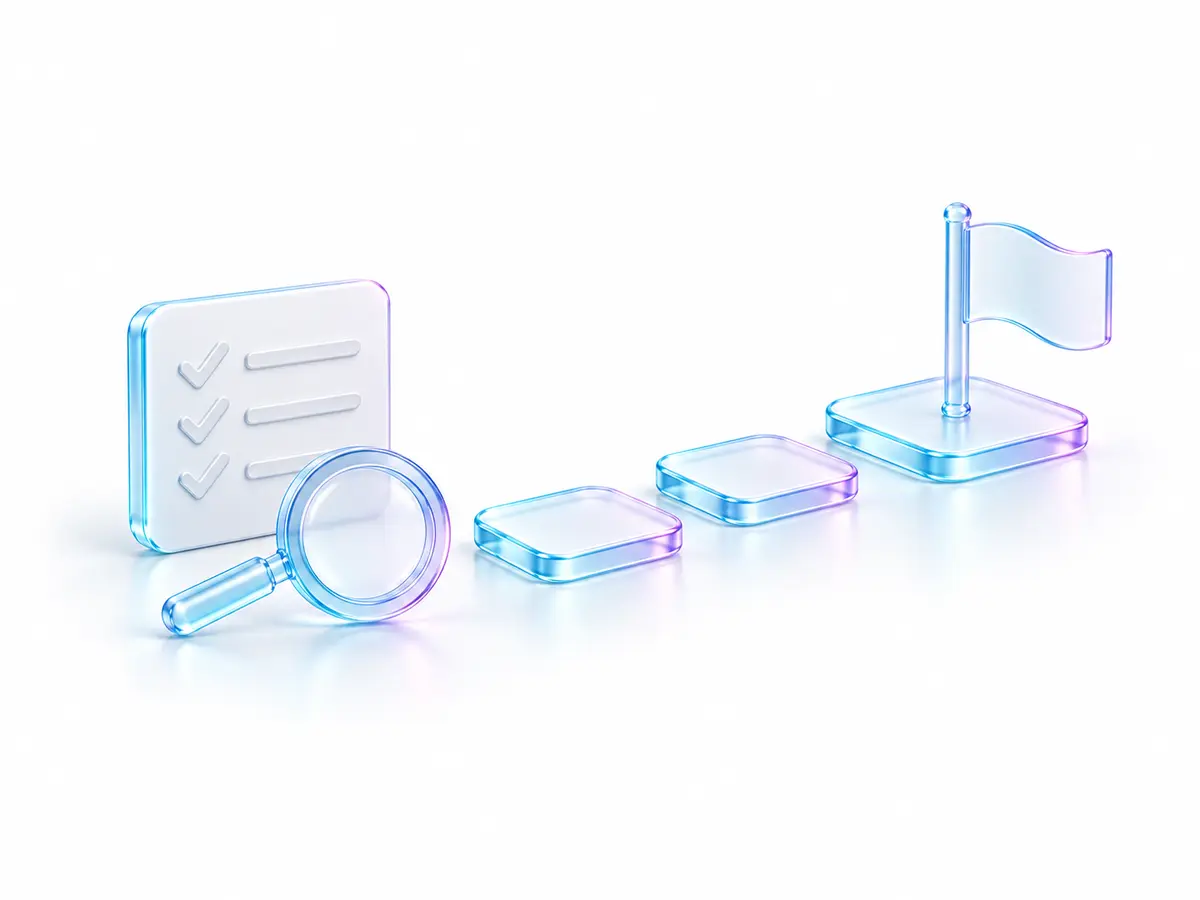
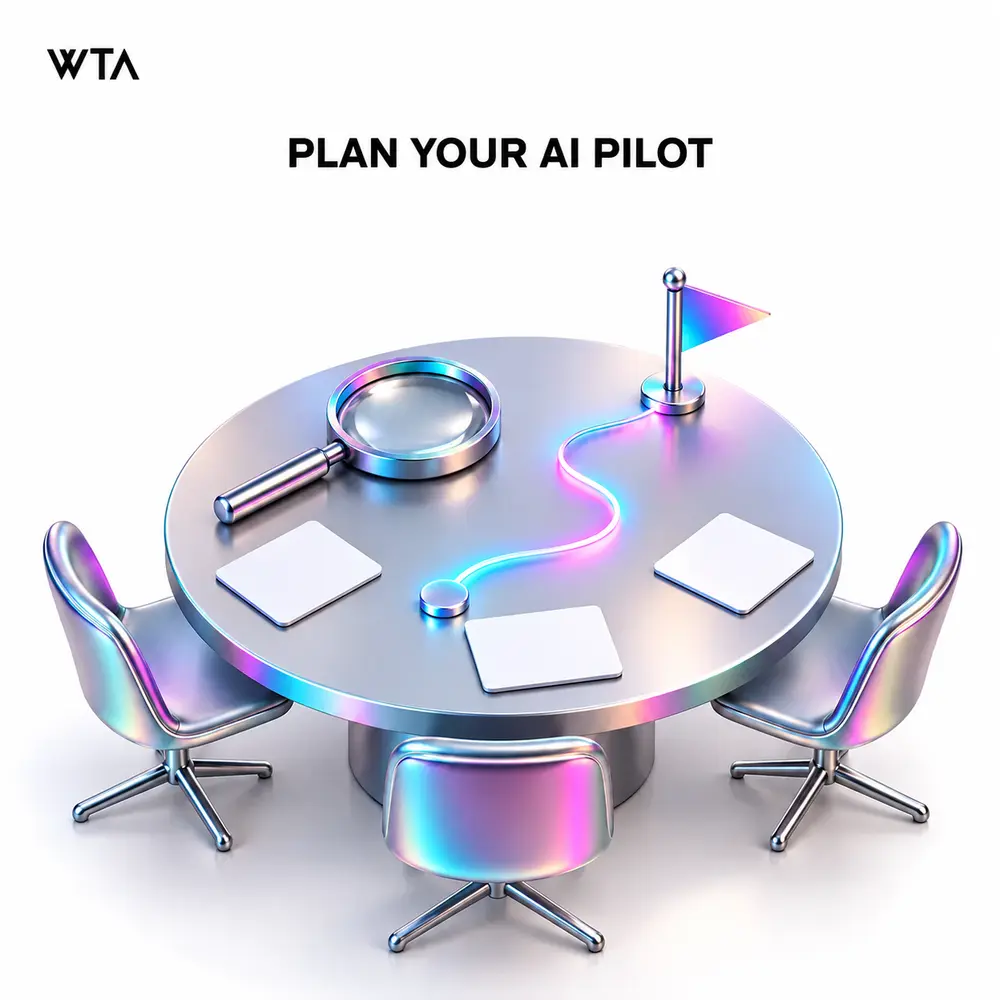
Define a focused pilot with prerequisites, accountable owners, acceptance measures, and a staged roadmap. WTA agrees on scope, evidence, ownership, and deliverables with your team before starting.
What your team receives
- Readiness scorecard: Strengths and gaps supported by evidence and an explained assessment method.
- Prioritized use-case shortlist: A reasoned recommendation on what to start, defer, or avoid.
- Data and integration gap register: Explicit prerequisites, dependencies, and responsible teams.
- Pilot business case: Expected benefits, costs, assumptions, and measurable acceptance targets.
- Governance requirements: Access boundaries, approvals, accountability, and escalation routes.
- Implementation roadmap: Owners, milestones, dependencies, and indicative effort.
The strongest outcome is a concrete decision: start with this use case, resolve these gaps, assign this owner, and measure these results.
Compare the full cost of the workflow
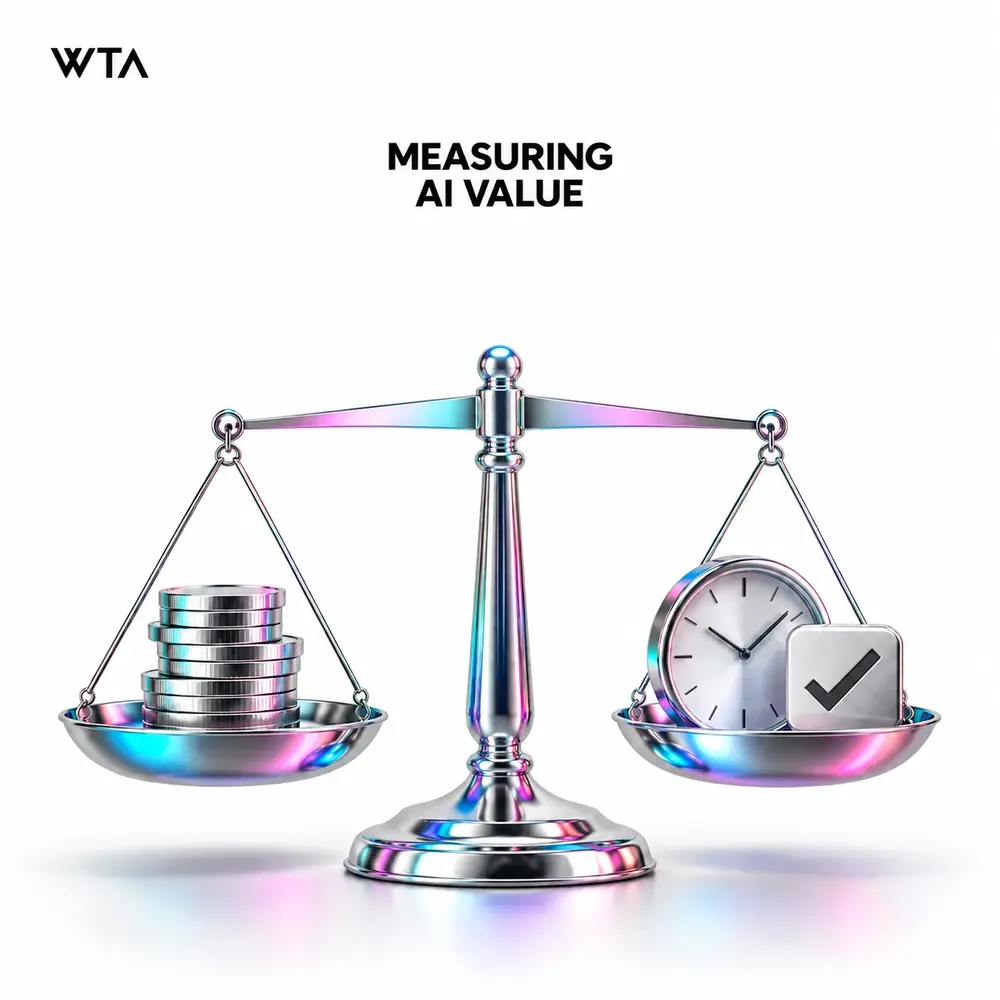
We compare the current cost of completing work with the proposed cost of an AI-assisted process. The assessment includes integration, infrastructure, model usage, human review, maintenance, support, and rework. Pilot evidence tests the assumptions before a wider commitment.
For example, a recruitment workflow may need consistent role criteria, connected candidate records, shared evaluation rubrics, and a baseline for turnaround time before automation can be meaningfully assessed. These are illustrative considerations, not claims about a particular customer's systems.
Learn more about our workflow audit approach and AI value measures. Our AI Strategy & Governance service supports broader planning; a Well-Architected Framework Review examines the health of an existing cloud workload.
Explore the full AI Readiness Assessment or discuss your requirements with WTA.









.svg)

.png)