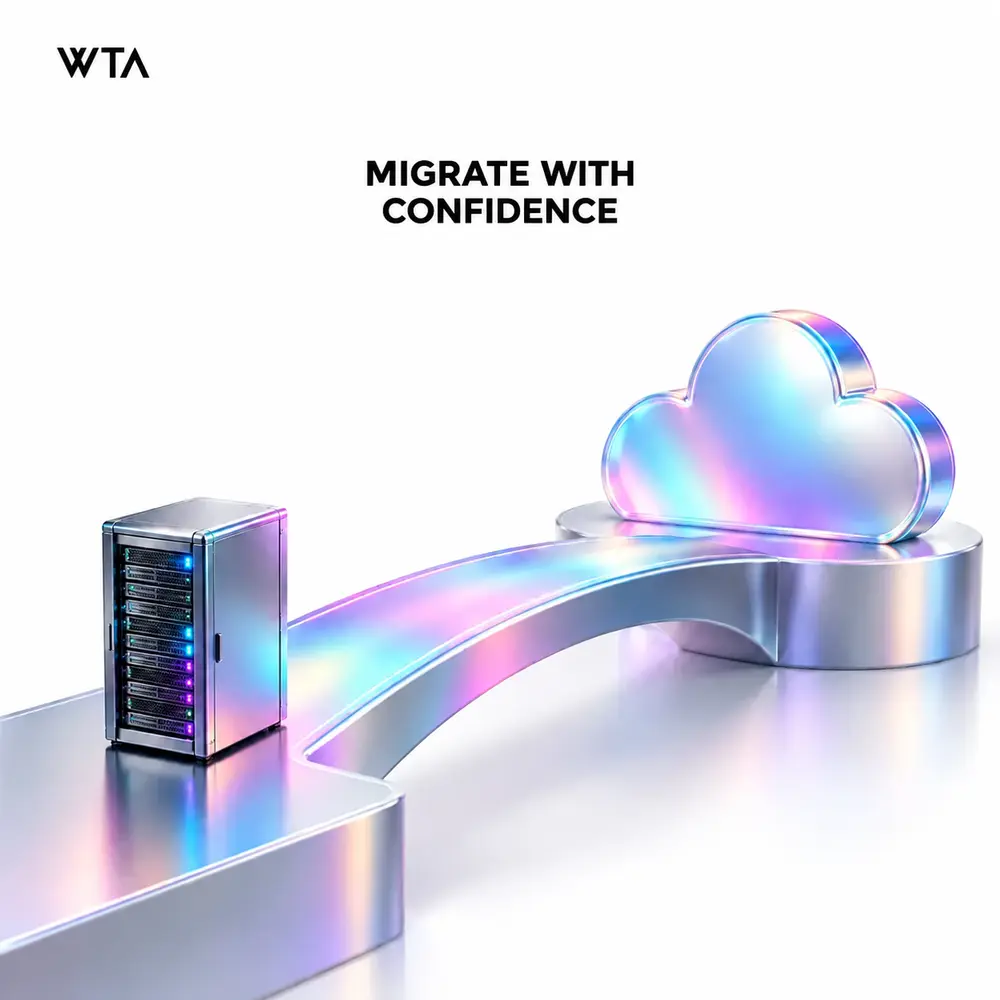
Modernize legacy systems in stages on Azure — review dependencies, connect useful agent workflows, and test access, reliability, and recovery before each release. Keep business owners involved throughout migration and rollout.
Start with the work
Review the current application, dependencies, business rules, and release constraints. Select one workflow that can be improved without replacing every system.
How we deliver
Map the migration sequence, expose required interfaces, and test data movement, recovery, and user access. Microsoft Azure supports the agreed target architecture; important changes retain release approval.
What your team receives
A dependency map, staged migration plan, tested integration, operating checks, and a backlog for subsequent improvements. Deliverables, timing, and support are agreed for the engagement.
Plan the next step
We compare quality, current effort, implementation costs, and ongoing operation before recommending expansion. Important actions retain agreed approvals and a recovery path. Explore our related service, Microsoft technology stack, and delivery methodology, or discuss your workflow with WTA.











.svg)

.png)